The application your staff live in all day
A casino is operated by people who are not engineers, at speed, under pressure, at three in the morning. The back office shipped module by module alongside the API — never afterwards — so there has never been a period where operating this platform meant editing the database by hand.
Eight groups, and the menu is data
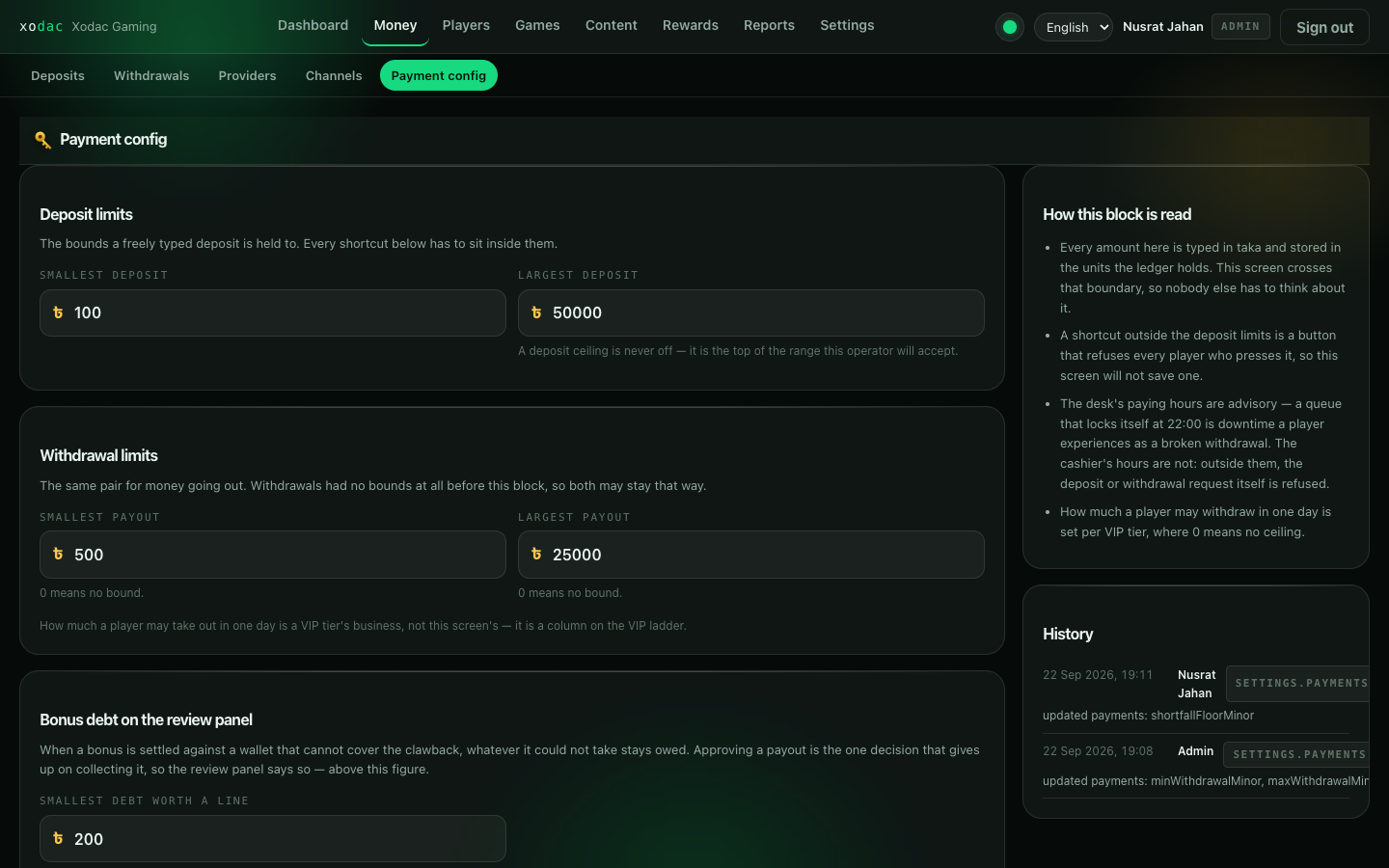
Dashboard
What happened today, in your timezone.
Deposits, withdrawals, gross gaming revenue, new players and the queues that need a person. The day boundary is cut in the operator timezone you configured, and the timezone is printed on the screen so nobody argues about which midnight it means.
Money
Work the deposit queue and approve withdrawals.
A deposit sits pending until a staff member matches the transaction id against the agent account. Nothing auto-credits. A withdrawal shows the turnover still owed at the moment the player asked, not at the moment you look, so approving it later cannot quietly change the rule it was judged against.
Players
Find an account and see everything about it in one place.
Profile, balance, ledger, deposits, withdrawals, bonuses, referral position, sessions and the reason for every block. Adjustments require a reason before they can be written, and the reason lands in the audit log next to the amount.
Games
Curate the lobby your players actually see.
Sync the catalog, set what is visible, ordered, featured or hot, and set the turnover weight each game contributes. A re-sync overwrites only what the provider owns, so your curation survives it.
Content
Change the site without calling us.
Banners, promotions, announcements, FAQ, the theme, the brand name. All of it is rows. A theme change takes effect on the next load, in every locale.
Rewards
Run bonuses, VIP, rewards and referral.
Bonus policies with their wagering multipliers, VIP tiers with both thresholds, daily and streak rewards, rebate and cashback, and the agent commission schedule. Each of these is a configuration screen, not a code change.
Reports
Answer a question without a database client.
Betting, transaction, bonus and referral records, read from the one ledger. A row in the betting record is a round, not a transaction, because that is how a player describes their own session.
Settings
Brand, appearance, staff, audit log, your own account.
Payment channels and agent number pools live here too. A staff member sees only the groups containing a page their role can open.
A screen a role cannot open is absent, not greyed out
The deposit queue is the screen that pays for the rest
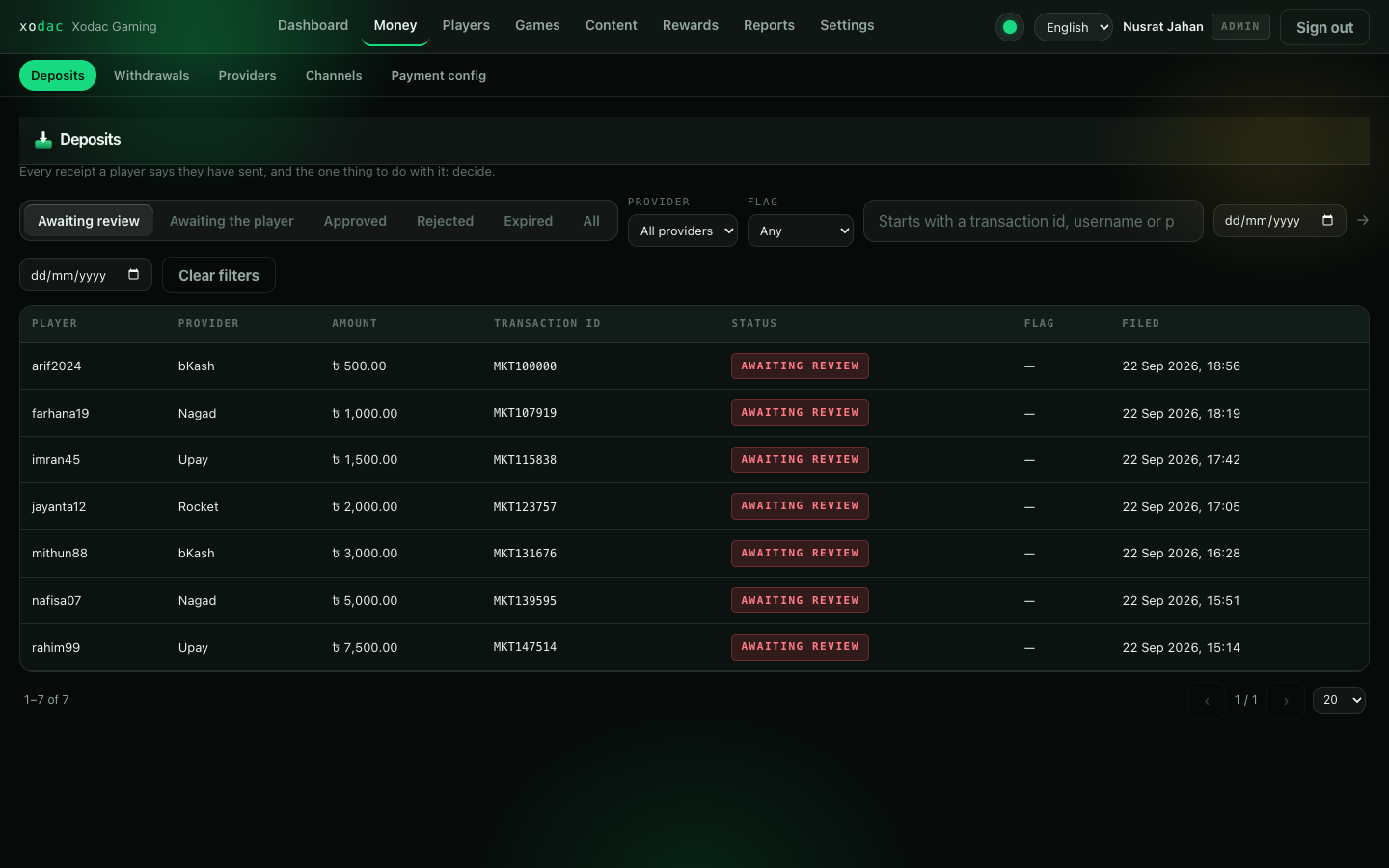
These four rails — bKash, Nagad, Rocket and Upay — are reference adapters for one market. The queue, the pool and the audit trail are market-agnostic; the rail is not. A new market means a new payment adapter, and we would rather quote that than tell you we support any payment method.
Bring the person who will work this queue to the demo
They will find the awkward case faster than any of us, and that is the point of showing it to them early.